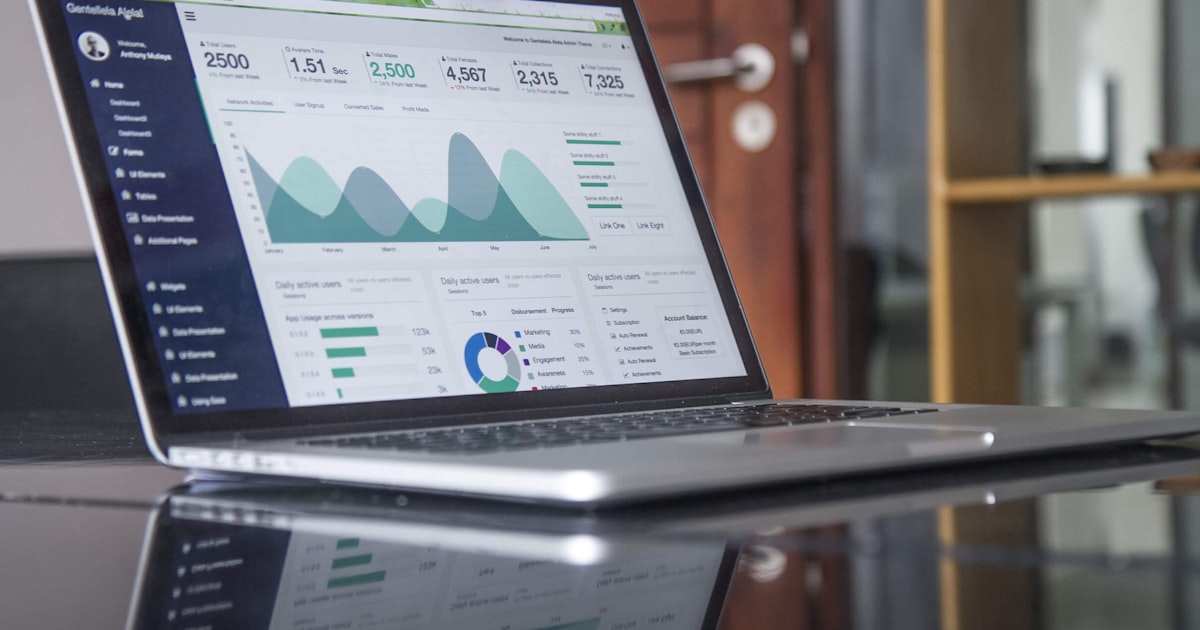
TL;DR: Setting up demand planning grocery retail data analytics requires integrating POS, inventory, and external data sources into real-time dashboards that track forecast accuracy, inventory turns, and profit impact. A 150-store chain reduced forecast error from 28% to 12% by implementing category-specific measurement frameworks and velocity-based KPI tracking.
Table of Contents
- The Data Crisis Every Operations VP Faces
- Why Traditional Retail Analytics Fail
- The ADAPT Framework for Retail Data Analytics
- Essential KPIs for Demand Planning Success
- Building Your Analytics Infrastructure
- Case Study: 100-Store Chain Success
- Implementation Roadmap and Measurement Strategy
The Data Crisis Every Operations VP Faces
8:47 AM Monday morning. Sarah Martinez, VP of Operations for a 47-store grocery chain, stares at three different screens showing conflicting inventory numbers. Her POS system says they sold 2,400 units of organic bananas last week. The warehouse management system shows 2,847 units shipped. Manual store reports claim 2,156 units moved off shelves.
Somewhere in that 691-unit discrepancy lies the reason her stores ran out of bananas by Thursday while competitors stayed stocked. This isn't just about bananas. It's about the fundamental challenge of demand planning grocery retail data: you can't forecast what you can't measure accurately.
Accurate demand forecasting can increase grocery profit margins by 2-4 percentage points, according to Oliver Wyman's 2026 analysis. Most grocery chains operate with data systems that were never designed to work together, creating blind spots that cost millions in lost sales and waste.
Why Traditional Retail Analytics Fail
Free Demo
See AI Replenishment on Your Data
30-minute walkthrough with a personalized ROI analysis for your chain.
Grocery retailers approach demand planning with 1995 tools: spreadsheets, gut instinct, and weekly reports that arrive too late to matter. The problem isn't lack of data. The data exists in silos that don't communicate.
Your POS system captures transactions but doesn't know about weather patterns that drive ice cream sales. Your inventory management system tracks stock levels but can't predict when the local high school football team makes playoffs, driving beer sales up 340% within a 25-mile radius while other stores see normal patterns.
Grocery retailers spend 2-3% of revenue on supply chain inefficiencies that AI can eliminate, according to Bain & Company's 2026 research. The biggest inefficiency isn't technology. It's measuring the wrong things at the wrong time.
Traditional retail analytics fail because they focus on what happened instead of what's happening now and what will happen next. They track lagging indicators like monthly sales reports when you need leading indicators like real-time demand signals.
Consider promotional planning. Most chains analyze last year's Memorial Day weekend sales to plan this year's promotions. But they miss the fact that Memorial Day fell on different calendar dates, weather patterns changed, and competitor strategies shifted. A 150-store grocery chain reduced forecast error from 28% to 12% by implementing separate models for organic produce with 3-day shelf life versus canned goods with 2-year shelf life, recognizing that different product categories require different analytical approaches.
The ADAPT Framework for Retail Data Analytics
Successful demand planning grocery retail data analytics follows the ADAPT framework: Analyze-Detect-Adjust-Predict-Track. This separates chains with 91.8% shelf availability from those struggling at industry average 70%.
Analyze means understanding your current data landscape. Most grocery chains collect data from 8-12 different systems: POS, inventory management, supplier portals, weather APIs, promotional calendars, labor scheduling, and customer loyalty programs. The first step isn't buying new software. It's mapping what data you already have and identifying gaps.
Start with your top 20 SKUs by revenue. Pull 12 months of sales data from your POS system. Cross-reference with inventory receipts and waste logs. You'll likely find discrepancies that explain why your forecasts miss by 20-30%. One regional chain discovered their POS system wasn't capturing promotional pricing correctly, making their demand patterns look random when they were actually predictable.
Detect focuses on identifying demand signals before they impact sales. This goes beyond historical patterns to include external factors: local events, weather changes, social media sentiment, and competitor actions. Labor shortages in grocery retail have increased by 35% since 2020, making automation essential, according to the National Grocers Association's 2026 report. Detection systems need to account for staffing constraints that affect product availability.
Adjust means modifying forecasts based on real-time information. Weather API shows a heat wave coming? Your system should automatically increase ice cream orders and decrease soup forecasts. Local social media mentions spike for a particular product? Demand models should factor that signal into next week's orders.
Predict involves generating actionable forecasts at the right granularity. Not just "we'll sell 1,000 units next week" but "Store 23 will sell 47 units on Tuesday afternoon, Store 45 will need 23 units Thursday morning." This granularity enables automated ordering that prevents both stockouts and overstock.
Track measures forecast accuracy and business impact continuously. The ROI payback period for AI demand forecasting in grocery averages 3-6 months, according to Gartner's 2026 analysis. You can't wait six months to know if it's working. Daily tracking of forecast accuracy, inventory turns, and profit impact identifies problems before they compound.
Essential KPIs for Demand Planning Success
Most grocery chains track the wrong metrics or track the right metrics too late. Revenue and profit matter, but they're outcomes. To improve demand planning, you need to measure the inputs that drive those outcomes.
Forecast Accuracy by Category should be your primary KPI, measured daily and segmented by product velocity. Fast-moving items like milk require different accuracy standards than slow-moving specialty items. Track mean absolute percentage error (MAPE) for each category:
- Fresh produce: Target 15-20% MAPE
- Dairy: Target 8-12% MAPE
- Frozen: Target 10-15% MAPE
- Dry goods: Target 5-10% MAPE
Inventory Velocity Variance measures how much actual product movement differs from predicted movement. Create a Velocity-Volume-Variability Matrix that plots products by sales speed, order quantities, and demand predictability. Products in the high-velocity, high-variability quadrant need daily forecast updates. Low-velocity, low-variability products can use weekly forecasts.
Stockout Duration tracks how long shelves stay empty after running out of product. Industry average is 2.3 days. Leading chains achieve 0.7 days by predicting stockouts 48-72 hours before they occur. Measure this by SKU and store location to identify patterns.
Waste Percentage by Shelf Life segments spoilage tracking by product durability. Organic produce with 3-day shelf life should have different waste targets than packaged goods with 12-month shelf life. Track waste as percentage of units received, not percentage of sales.
Cross-Category Impact Metrics measure how promotions in one category affect demand in related categories. Beer goes on sale? Chip sales typically increase 15-25%. Fresh produce prices spike? Frozen vegetable sales rise 8-12%. Your analytics dashboard should track these correlation patterns to optimize promotional strategies.
Labor Efficiency Ratios connect demand forecasting accuracy to staffing optimization. Better forecasts enable better labor scheduling. Track hours spent on manual ordering, emergency deliveries, and stockout resolution. These should decrease as forecast accuracy improves.
52% of consumers have switched grocery stores due to persistent stockouts, according to Retail Feedback Group's 2026 research. Your KPI dashboard should include customer retention metrics tied to product availability.
Building Your Analytics Infrastructure
Most grocery chains approach analytics infrastructure backwards. They buy expensive software first, then try to integrate their data. The right approach starts with data architecture, then adds analytics tools that work with your existing systems.
Data Integration Strategy begins with identifying your primary data sources and their update frequencies. POS systems typically update every 15 minutes. Inventory systems might update hourly. Supplier data could be daily or weekly. Weather data updates every hour. Your analytics platform needs to handle these different rhythms without creating bottlenecks.
Start with APIs where possible. Most modern POS systems offer REST APIs that can feed real-time transaction data to analytics platforms. Legacy systems without APIs? Consider middleware solutions that can extract data without disrupting operations.
Real-Time Dashboard Architecture requires balancing speed with accuracy. You don't need every metric updated every minute. Sales velocity needs hourly updates. Inventory positions need updates every 4 hours. Forecast accuracy can be calculated daily. Weather impact analysis might update every 6 hours.
Design your dashboards for different user roles. Store managers need SKU-level data for their location. Regional managers need category trends across multiple stores. C-level executives need profit impact summaries. Don't try to put everything on one screen.
Data Quality Controls matter more than sophisticated algorithms. Garbage in, garbage out applies especially to demand forecasting. Implement automated data validation that flags anomalies: negative inventory counts, sales spikes above 3 standard deviations, missing transaction timestamps, or duplicate order entries.
Create data quality scorecards for each source system. Track completeness (percentage of expected records received), timeliness (average delay from event to data availability), and accuracy (percentage of records passing validation). Data quality below 95% makes forecasting unreliable.
Security and Compliance Framework protects sensitive business data while enabling analytics. Implement role-based access controls that limit data visibility to business need. Store managers see their location's data. Competitors shouldn't access your demand patterns through unsecured analytics platforms.
Consider data residency requirements if you operate in multiple states or countries. Some jurisdictions require customer data to stay within specific geographic boundaries. Your analytics infrastructure needs to accommodate these constraints without limiting functionality.
Case Study: 100-Store Chain Success
Dobririnsky/Natali Plus, a major Eastern European grocery chain with 100+ stores, faced the same demand planning challenges as chains worldwide: 70% shelf availability, 5.8% write-off rates, and manual ordering processes consuming 6 hours per store per week.
Their transformation began with a 30-day pilot program focusing on fresh categories across all locations. Instead of implementing new POS systems or replacing their ERP, they built an analytics layer that integrated existing data sources with external signals like weather, local events, and supplier availability.
Results were measurable within 30 days:
- Shelf availability increased from 70% to 91.8%
- Write-off rate dropped from 5.8% to 1.4% (a 76% reduction)
- Sales growth reached 24%
- Manual ordering time decreased from 6 hours to 45 minutes per store
The key wasn't sophisticated AI algorithms. It was systematic measurement and rapid iteration. They tracked forecast accuracy daily, adjusted models weekly, and measured business impact continuously. Organic banana forecasts missed by 15% in week two? They identified the cause (local weather API wasn't accounting for microclimate differences) and corrected it in week three.
Their analytics dashboard focused on actionable metrics: which products to order today, which stores need priority deliveries, and which categories showed demand pattern changes. Store managers received mobile alerts when forecast accuracy dropped below thresholds, enabling immediate investigation.
The 76% reduction in waste didn't happen overnight. It resulted from hundreds of small improvements: better produce rotation schedules based on predicted demand, automated reorder points that adjusted for seasonal patterns, and cross-category promotional optimization that prevented overordering in related products.
Free Tool
See How Much Spoilage Costs Your Chain
Get a personalized loss calculation and savings estimate in 30 seconds.
Implementation Roadmap and Measurement Strategy
Building effective demand planning grocery retail data analytics takes 90-120 days when done systematically. Most chains try to implement everything simultaneously and fail. The successful approach phases implementation to build capabilities incrementally.
Phase 1: Data Foundation (Days 1-30)
Start with your existing data sources. Don't buy new software yet. Extract 12 months of sales data from your POS system. Cross-reference with inventory receipts, waste logs, and promotional calendars. Clean and standardize the data formats.
Identify your top 100 SKUs by revenue and volume. These products will be your analytics testing ground. Calculate basic metrics: average daily sales, demand variability, stockout frequency, and waste percentage. You'll likely discover data quality issues that need fixing before advanced analytics can work.
Set up basic data validation rules. Flag negative inventory counts, sales spikes above 200% of normal, missing transaction data, and duplicate entries. Create automated reports that identify data quality issues daily.
Phase 2: Analytics Platform (Days 31-60)
Choose analytics tools that integrate with your existing systems without requiring major infrastructure changes. Cloud-based platforms often work better than on-premise solutions because they can scale quickly and integrate multiple data sources.
Build your first dashboard focusing on forecast accuracy metrics. Track daily sales vs. Predicted sales for your top 100 SKUs. Measure mean absolute percentage error (MAPE) by category. Set accuracy targets: 10% MAPE for fast-moving items, 15% for medium-velocity products, 20% for slow-moving specialty items.
Implement basic demand forecasting using historical patterns plus external factors like weather and local events. Don't try to build sophisticated machine learning models yet. Simple statistical forecasting with external adjustments often outperforms complex algorithms with poor data quality.
Want a personalized walkthrough? Schedule a demo →
Want a personalized walkthrough? Schedule a demo →
Want a personalized walkthrough? Schedule a demo →
Phase 3: Automation and Optimization (Days 61-90)
Begin automating reorder decisions for your most predictable products. Start with items that have consistent demand patterns and reliable suppliers. Gradually expand automation as forecast accuracy improves and confidence builds.
Implement exception-based management. Instead of reviewing every forecast daily, focus on products where actual sales deviate significantly from predictions. Set threshold rules: investigate when MAPE exceeds 25% for any SKU, when stockouts last longer than 1 day, or when waste exceeds category targets.
Add cross-category demand correlation tracking. Measure how promotions in one category affect sales in related categories. Use these insights to optimize promotional planning and prevent unintended stockouts.
Phase 4: Advanced Analytics (Days 91-120)
Introduce machine learning models for complex forecasting scenarios: seasonal products with irregular patterns, new product launches without historical data, and promotional lift prediction. But only after your data foundation and basic analytics are working reliably.
Implement real-time demand signal detection. Connect social media APIs, weather services, and local event calendars to your forecasting models. Track correlation between external signals and demand changes to improve prediction accuracy.
Expand analytics to include labor scheduling optimization based on predicted demand patterns. Better forecasts enable better staffing decisions, reducing labor costs while maintaining service levels.
What to Measure Tomorrow
Don't wait for perfect data or complete systems. Start measuring demand planning effectiveness with tools you already have. The goal isn't perfection. It's improvement.
Pull your top 20 SKUs by revenue from last week's sales data. For each product, calculate the difference between what you ordered and what you sold. Products with large positive differences (ordered much more than sold) indicate overforecasting. Large negative differences (sold much more than ordered) suggest underforecasting or stockouts.
Create a simple spreadsheet with columns for: SKU, predicted sales, actual sales, forecast error percentage, stockout hours, and waste units. Update this daily for two weeks. You'll identify patterns that reveal forecasting blind spots.
Track your current manual ordering time. How many hours per week do store managers spend placing orders? How often do they place emergency orders? How many products run out of stock each day? These baseline metrics will show improvement as analytics capabilities develop.
Measure customer complaints related to product availability. Track social media mentions of your stores being "out of stock" on specific items. Monitor competitor availability for your top products. This external perspective reveals gaps that internal metrics might miss.
Start with measurement, not prediction. Understanding your current performance creates the foundation for improvement. Once you know where you are, you can plan where to go next. Effective demand planning grocery retail data systems begin with accurate measurement of current performance, then build predictive capabilities that drive measurable business results.
Related Articles

AI Grocery Ordering for IT Directors: What You Need to Know
IT Directors: Learn how AI grocery ordering reduces stockouts by 30% and cuts IT support tickets by 40%. See the day-in-the-life before and after.

Fresh Produce Demand Forecasting Japan: Challenges & AI Solutions
Discover how fresh produce demand forecasting japan is transformed by AI. Learn to cut shrink 41% and improve accuracy with real case studies.

Sustainability Through Smart Inventory: How Grocery Chains Cut Food Waste with AI
Learn how grocery chains use AI demand forecasting to reduce produce waste, boost shelf availability, and improve margins. Real case studies and a 5-step action plan inside.